Tuesday, August 23, 2016

December 2015 pre xmas bash to the Limpopo!

RC Nightjars
This was a special trip as my Charlotte was joining myself Matt Prior and Sam Bayley, quite a formidable team!
Water Thick-knee
We started off in the Springbok flats an interface of farmland and scrubby savannah, highlights were 6 Rufous-cheeked Nightjars and one European Nightjar. Also got Matt a Lesser Grey-shrike.  
Next was the Lowveld where we stayed with Friends Rael and Helene at their lovely bush house on the dry Riet river. Everywhere was so dry and not many birds about, but we covered the dam which had a fair bit of wet mud and got a good load of Three-banded Plover, Water Thick-knee, Blacksmith Plovers and a few Malachite Kingfishers.

Malachite Kingfisher
From here we headed into the Magoebaskloof area of Afro-montane forest. En route we got a Shikra and a Long-crested Eagle coming into Magoebaskloof. 
We set as many nets in the forest as possible, and were rewarded with some gems like the endemic Yellow-throated Woodland Warbler and Chorister Robin, then White-starred Robin, Green Twinspot and Cape Batis. The best was one evening just before closing, we got a Wood Owl in one of the nets! It had gone in after a Chorister Robin, and got caught!
Three-banded Plover

On the back tracks here we got our first Steppe Buzzard, 2 Jackal Buzzards and another Long-crested Eagle.

Heading North to the Limpopo Valley, we got a Lesser Kestrel, a pair of Black-shouldered Kites, and 4 adult Black-chested Snake Eagles.

Our site in the Mpangubwe National Park was a very nice one, and we were blessed with a swimming pool in the 40+ degree heat! However it was more important to set nets around it as there were many Barn Swallows coming to drink. Over the 2 days here we got 68 swallow including a BRITISH CONTROL!!!! wow! that was something! at the time of writing, I can say that it was ringed in Ireland in 2014. Not bad at all!
One night we tried for Barn Owl and after putting the call on under the net, a male responded immediately and we had our first Owl! Charlotte was very happy to ring it!!  

Matt and his Lilac-breasted Roller
Raptoring was very productive during the day and we managed to get 3 African Hawk Eagles, including a scene with a male, female and juv all round the trap. We ended up catching the adult male and juv on the trap at the same time!
Charlotte with her Wahlberg's Eagle

One afternoon we set out with Luke, a young and enthusiastic falconer, who lived locally and we managed to get a Black-chested Snake Eagle and another African Hawk Eagle, both adults. 
Spotting a Wahlberg’s Eagle flying overhead, we dropped a trap for the bird and after a single turn, the bird spotted the the trap and down it came, nothing as exciting as watching this happen. called a ‘Sky Catch’ it just goes to prove how these raptors rarely miss anything.
Red-Rumped Swallow 3rd record for SA!
When not finding raptors, we were content to trap Purple and Lilac-breasted Rollers.

Next site further upstream of the Limpopo had just had 70 mm or rain! There were swallows everywhere and a nice acacia thicket full of all sorts warblers and things!

B-C Night Heron
African Snipe
One afternoon whilst catching Barn Swallows, Sam had extracted a swallow and declared it a RED-RUMPED SWALLOW! In disbelief we even got the book out just to make sure, but sure enough, there were the new black under-tail coverts coming through and the neck collar of this juvenile, which is probably the 2nd South African record of this species! The National rarities coordinator was informed and photos sent off.

3 Avocett
Next trip was to the south and a wetland near Johannesburg. Sadly we had to say goodbye to Charlotte who had to return to Canada.

The wetland proved to be quite productive, with many warbler species in the reeds, Great, Lesser Swamp, Sedge, Little-rush and African Reed. 
There was only one spot to get nets up over the water and we got several African Snipe along with 3 Pied Avocet, Red-billed, Hottentot and Cape Teal and a cracking adult Black-crowned Night Heron.  

On the last day we went via the Devon Birding area and found an active colony of South African Cliff Swallows under a bridge and ringed some 30 odd birds including 2 Greater-striped Swallows.


And that was that. 609 birds ringed of a record 
115 species!
Charlotte with an adult BC Snake-eagle

Sam Bayley with a Shikra


Mat Prior with a juv Jackal Buzzard


Matty and I with the BTO control BS
Juv and adult Af Hawk Eagles on one trap!

Re-billed Oxpecker


Long-crested Eagle


Wood Owl

Republic of Congo
November 2015

Back again this time to work on the Rosy Bee-eater and African River Martin colonies respectively.
With me were Dr Stuart Sharp from Lancaster University hoping to get a project off the ground to study the African River Martins, a very little known species of conservation concern. Also in the ringing team were Helen Hipperson, Phil Clay and Rael Loon.

Arriving there a week ahead I had time to go and have a peek at the colony. To my huge relief, there were plenty of birds in full nesting mode! The River Martins were feeding young and the Bee-eaters I was to discover, were mostly gravid or incubating. 
I was with a couple of day visitors to the reserve, Jim and Kevin from Chevron Oil who were very excited to see the operation.
I set a single 2 shelf net and in one hour managed to ring 22 Rosy Bee-eaters in an hour! I wanted to leave the River Martins until Stuart arrived.

When everyone had arrived, over the next two days we ringed 106 Rosy Bee-eaters. Stuart managed to do some endoscoping in the River Martin colony and discovered the burrows were over 1 metre long, more than the digiscope arm! We did see a snake of some sort enter a burrow and come out with a River Martin, it was hard to not interfere with the plight of such a vulnerable and data deficient species.

Giving the site a rest, we focussed on the scrub around the guest house and caught a few Palearctic migrant warblers, Garden, Willow and the first European Sedge Warbler for the site!
Overhead were big flocks of Common Swift and a single Common Sand Martin, the 2nd national record.

Nights were on a few occasions spent dazzling and here we managed to catch a few of Swamp, Firey-necked and Gabon Nightjars, as well as a Flappet Lark and Senegal Plovers!  

Our first attempt at River Martins back at the colony produced 9 birds, such spectacular things and it was great to see the suitably awed expressions on the other ringers. In this session we also did another 50 odd Rosy Bee-eaters.
Giving the colony another rest, we went to survey a forest in another part of the reserve, where recently I had seen a family of Chimpanzees! We set 6 nets in this good tall mature forest. We were not disappointed! We got a good variety of species with Chestnut Wattle-eyes, a few Red-bellied Paradise Flycatchers (sub species Neumanni), Olive-green Camaroptera, and remarkably a male Red-billed Dwarf Hornbill followed by a stunning Gabon Coucal! Not to mention a cracking Blue-billed Malimbe. 
On the way back we found a Green Sandpiper, virtually unknown in the country! 

We spent another session at the guest house and in the bush nets were extremely surprised to get an young Chestnut-Flanked Sparrowhawk! This is the 2nd one caught and ringed here, a very secretive and elusive bird of prey of which there are virtually no photographs! This one was a 2nd year female and what a bird!

Next was a trip up river to a camp on the banks of the Kouilou River and another forest type to survey.
We got a load of nets up with a lot of work with the machete and listened to the Wood Owls calling at night. The morning proved very productive, several species, including Fire-crested Alethe, Blue-breasted Kingfisher, Red-tailed Ant-thrush (first for the reserve), White-throated and Red-tailed Greenbuls (also 1st) and a Brown-eared Woodpecker. Other firsts seen here for the reserve was a White-crested Hornbill, a very smart bird.

On the way back, we visited the beach on the Atlantic Ocean, quite a setting at the Kouilou River mouth. Just before setting a few shore nets, we did a recce in the daylight and found an adult summer plumaged FRANKLIN’S GULL!! This was a first for the country and a very good record indeed of this New World gull! 
That night we set a few wader nets to see if we could get any of the 20 odd thousand Royal Terns which roost here. We also set a line of single shelf nets for Grey Pratincole.
In what seemed like no time at all, we had got 3 Royal Tern, 6 Grey Pratincole and 2 White-fronted Plover. But the real bonus bird were a pair of AFRICAN SKIMMERS!!! All this and back at the guest house for supper, what a great little session!! 

In addition to the ringing we got 14 new species for the reserve putting the list now at 306.

We also managed to ring 200 Rosy Bee-eaters.
the Rosy Bee-eater colony
Phil and Helen ready to ring a few Rosy's


Stuart endoscoping the River Martin colony
setting off up the Kouilou River

Friday, July 31, 2015

Winter Birding trip to Tchimpounga National Nature Reserve, and Conkoati National Park, Republic of Congo, June to July 2015

June and July saw me back in the Congo again to guide two groups of Canadians.
This time of the year is the ‘winter’ or dry season and as such not the best time for birding, as many species lose their breeding plumage and migrants are absent.

However, there were some really good highlights and I did manage to get the usual line of nets up in the reserve as well as a morning in Conkoati Nat park to see what was about.
The netting area is one of thick scrub and rank grass, with quite a few introduced Lantana bushes. The latter is a real magnet for the many frugivorous bird species in the area and which turn up most regularly in the nets.
It was quite the time for Tinkerbirds, with one net round producing a full flush of four! Different species, Yellow-rumped, Yellow-throated, Speckled and a new one for me, Red-rumped Tinkerbird!

As well as these were Little Greenbuls, Little Bee-eaters (including 4 in one net round!),  a pair of Klass’s Cuckoo, Pygmy Kingfishers, Green Crombec, Common Bulbul (ssp gabonensis) and a few Green-headed Sunbirds.

Conkoati National Park
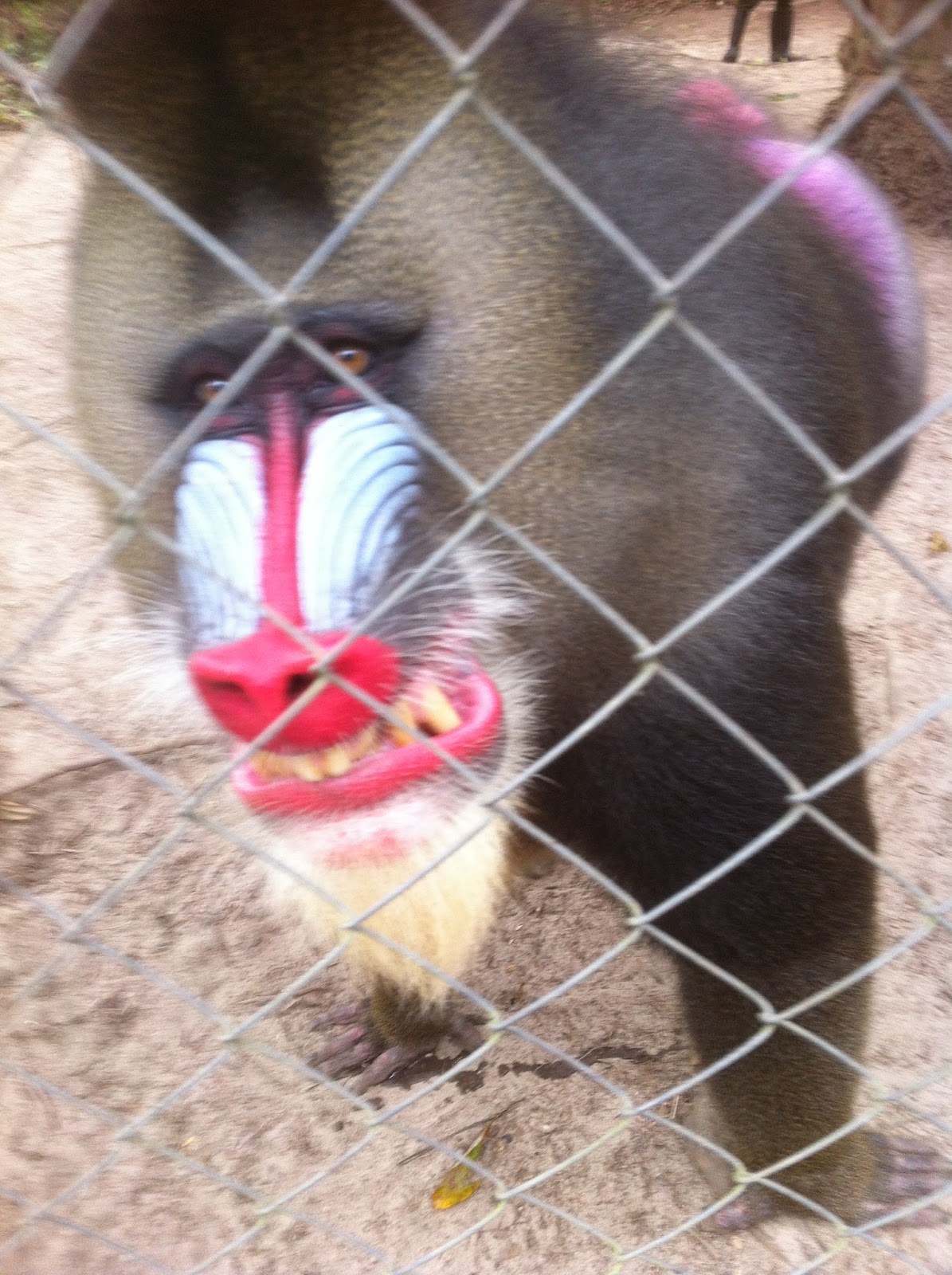
This was a quick overnight trip to visit the Mandril release program that JGI have been running. Many individuals rescued from bush meat markets have been given a second chance and are now actually free roaming again in the forest.
It was an opportunity for me to put some nets up in the forest for the afternoon and morning!

I got a total of 36 birds, the highlight for me, was a lifer in the form of a Fraser’s Sunbird! Others were Fire-crested Alethe, Yellow-lored Bristlebill, Yellow-browed Camaroptera, Camaroon Sombre Greenbul, Western Bluebill and Red-tailed Greenbul (which I thought could be White-bearded Greenbul for a while, but RT’s were calling in the area). I also got a gorgeous Blue-headed Wood-dove!

One net round, I disturbed a Long-tailed Hawk! This awesome forest raptor had nailed a Yelllow-whiskered Greenbul in the net!! Oh my!! If that had only stayed in!! The greenbul was ok!
Ntombo River Camp is a fantastic site in this park. At night there are Vermiculated Fishing Owls, Wood Owl, Nkulengu Rail, White-crested Tiger-heron and probably so much more. During the day, squadrons of the massive Black-casqued Wattled Hornbills cruise overhead making such a noise with their wings. There were Shining-blue Kingfishers and White-bibbed Swallows zipping up and down the river, Black-headed and Black Bee-eaters along the banks. There were Great-blue and Yellow-billed Turacos calling all the time and Rosy Bee-eaters over the canopy all day. For the first time here, I saw at least 7 White-crested Hornbill’s in the forest, such a stunning bird. Elephant, Buffalo, Gorilla and Chimpanzee frequent the area around the camp, so opening the net at dawn is always charged with a bit of excitement!


Tchimpounga NR
Back at the sanctuary, I took guests on a series of hikes in the reserve and found saw a
single Wattled Starling, being the country’s 3rd record of this Afro-tropical migrant!

Round the house a great flock of swallows were feeding on a hatch of small flies. Included in these were Black Saw-wing Swallow (subspecies ‘pettitti), Red-throated Cliff Swallow, Lesser-striped Swallow, Grey-rumped Swallow, Red-chested and Mosque Swallow!
A boat trip up to the islands in the Kouilou River made a great day out. First off, getting a pair of African Spoonbill flying south over the river constituted a new record for the reserve, with only a couple of previous records for the country. Also a group of Banded Prinias in some herbage along the banks was also new, but expected for the reserve, also previously thought as rare in this part of the world was a single Ayre’s Hawk Eagle. There were a couple of over summering Ospreys on the river and at the mouth, a roost of some 200 Royal Terns, with several Sandwich (new for RNT), Common and Little Tern (also new) along with 50 or so African Skimmer. In among the debris on the beach were a few Grey Pratincole.
A trip out to Lake Foni produced 2 more Black-headed Bee-eaters, now seen regularly here, 3 Pygmy Geese of note. In the forest, we saw Moustached and Putty-nosed Monkey’s.

Looking forward to November 2015 when we go back to ring the Rosy Bee-eaters and African River martins, the latter being the focus of the first ever research done on the species!!

Always looking for people to join us!!

Thursday, July 30, 2015


Winter Spring-trapping on a remote hill in Gauteng, South Africa

Niall Perrins and I decided to head to Mabusa nature reserve for the day to have a look round. We took a Bal-chatri with the idea of catching and ringing Ovambo Sparrowhawk, or any other raptor we could get. We also took some spring traps.

Mabusa was a bit quiet, we did manage to drop a trap for a pair of Ovambo’s but they were too busy thinking about nests and family!
We attempted to catch a Brown Snake Eagle, but the bird was also not interested.
We decided to go and have a look at a large rock covered hill which has turned up some good endemic birds in the past. On arrival we saw a couple of endemic Cape Rock Thrush. I set 3 traps and in no time had got one! Incredible eyesight, the bird saw the mealworm from some 30m up on a radio tower!
A bit more perseverance and we got a second Cape Rock Thrush, an adult male this time, such stunning birds. AND THEN, a pair of Buff-streaked Chats arrived and in no time we caught a female, a second endemic!  Also in this time we had no time to appreciate getting 2 Familiar Chat! Lovely little birds, but we were too excited about the Buff-streaked Chat! Then when we thought we couldn’t do any better, we caught a Mountain Wheatear! It was the female and we did get the male briefly, but it got out of the trap.

Flushed with success, we drove out, flushing a group of White-bellied Korhaan on the way!
Limpopo Brown Snake-eagle expedition July 2015
Pear-spotted Owlet
Over the years we have been seeing an influx of Brown Snake Eagles into a particular area of Limpopo Province just south of the Soutpansberg Mountains, so we decided to see if we could get a few.
Michael Parker and I set off form Johannesburg at 0500 and set off north up the N1.
Brown Snake-eagle
On the way we saw some good raptors, adult Black-chested Snake Eagle, African Hawk Eagle and oddly, a pair of Long-crested Eagles near the Nyl Floodplain. Plenty of Black-shouldered Kites and Greater Kestrels around, but we are not after them this trip!
First customer was a BSE on a pylon, straight in, nothing like hungry winter birds to react to a trap! It was a big bird, in good condition at 2.48kg.
Lizard Buzzard


 We got 2 Lizard Buzzards in quick succession in the shadows of the Soutpansberg Mountains and almost had a 2nd BSE, but a vehicle flushed it from the trap.

Tried for an adult African Hawk Eagle near camp, but it had a full crop and was too wary of our vehicle. That night we got a Pearl-spotted Owlet in the net.

Day 2, we were 5 mins out of camp when we spotted, and caught, a juvenile Black-chested Snake Eagle sitting in a thorn tree. Please with its weight of 1.42kg, a good weight for a winter youngster.
Juv Black-chested Snake-eagle
We made a big run for the Limpopo River and Mpangubwe National Park, but all was very quiet. We got our 3rd BSE on the way back to camp and another which got off the trap before we got to it. It was nice to see a Kori Bustard near the camp and the land owner said they had 6 young this year for the first time!
We headed west today for the Woodbush Forest, region of Afro-montane mist-belt forest. On the way we found 3 BSE in one area, and after a bit of manoeuvring, we got our 4th BSE! There were a pair of adult Lanner here which we dropped a trap for with a Zebra Finch lure. Birds did react, bombing the trap several times, but the required ‘flush and chase’ never happened for the two falcons.


Woodbush Forest
Once into the mountains, we saw a couple of Jackal Buzzards and 2 Forest Buzzards, our target here. Last July I spent 2 days here with Charlotte England where we caught 4 of these endemic and local migrants, seemingly arriving in this region at this time of year.
We dropped for one Forest Buzzard which was a peach of a drop, but in the exact spot we had caught one last year. The bird was not at all interested, so I assumed it was very likely the same bird!
Over the next couple of hours we dropped for no less than 6! Long-crested Eagles!!, and catching 2 with one getting off trap. This was quite possibly also a movement up into this region from the lowveld.

All in all a good trip with 9 good raptors ringed and 4 target birds.

Wednesday, February 4, 2015

October Limpopo Raptor Run 2014


I picked up Doctor Richard Charles at the Pilansberg National Park and we set off north for the day.
Fist off we got an adult Pale-chanting Goshawk for a warm up, funny, but it was the only PCG we saw just about all day!


An hour or so later we came across a juvenile Black-chested Snake Eagle which came to the trap without any nonsense.

Then 10 minutes later another! This time a 2nd year bird. Obviously the fields are yielding some good seed-rodent-snake activity!

And last up a Black-shouldered Kite. Not a huge amount of birds, but a great day which required ample re hydration at the lodge that evening!


Republic of Congo June and July 2014


Republic of Congo June and July 2014

I had two trips to do guiding the VIP's for The Jane Goodall Institute at Tchimpounga National Nature Reserve over June and July.

These months are fairly quiet with not much in the way of migrants or breeding, so I was interested to see what I would get in the nets in between guiding.

I set the usual line of nets in the gardens of the Chimp sanctuary and got the usual Pygmy Kingfishers, Rufous-tailed Palm Thrush, Little Greenbul, Green-headed and Olive-bellied Sunbirds.
So I was quite excited when I found a small honeyguide in the net! Normally I would of expected a Lesser Honeyguide, but knowing that bird as a dry savannah species which does not occur anywhere near here, I took great interest!
After looking at the book, I concluded that it was a Least Honeyguide! A new one on me!
Least Honeyguide

As usual there were always a few new records for the reserve, this trip being; Cuckoo Hawk, Cassin's Honeybird, Pygmy Goose, Levaillant's Cuckoo and a very interesting but distant Kestrel, which could really only be Common, a long way out of range for the southern Rock Kestrel.

Thick-billed Honeyguide
The second trip again I set the usual nets and this time and tried Thick-billed Haneyguide and Black-backed Barbet on the ipod and speaker which I tried for 2 net rounds before stopping. Then the next two rounds produced non other than a Thick-billed Honeyguide and a Black-backed Barbet of the nominate race 'minor'.

One other new species ringed for the reserve was a Senegal Coucal whcih I managed to flush into the net.

An interesting lunch on the beach and a sea watch turned out a couple of good species, a flock of Greater Flamingos flew north as did a Wilson's Petrel!

Black-backed Barbet nominate 'minor'
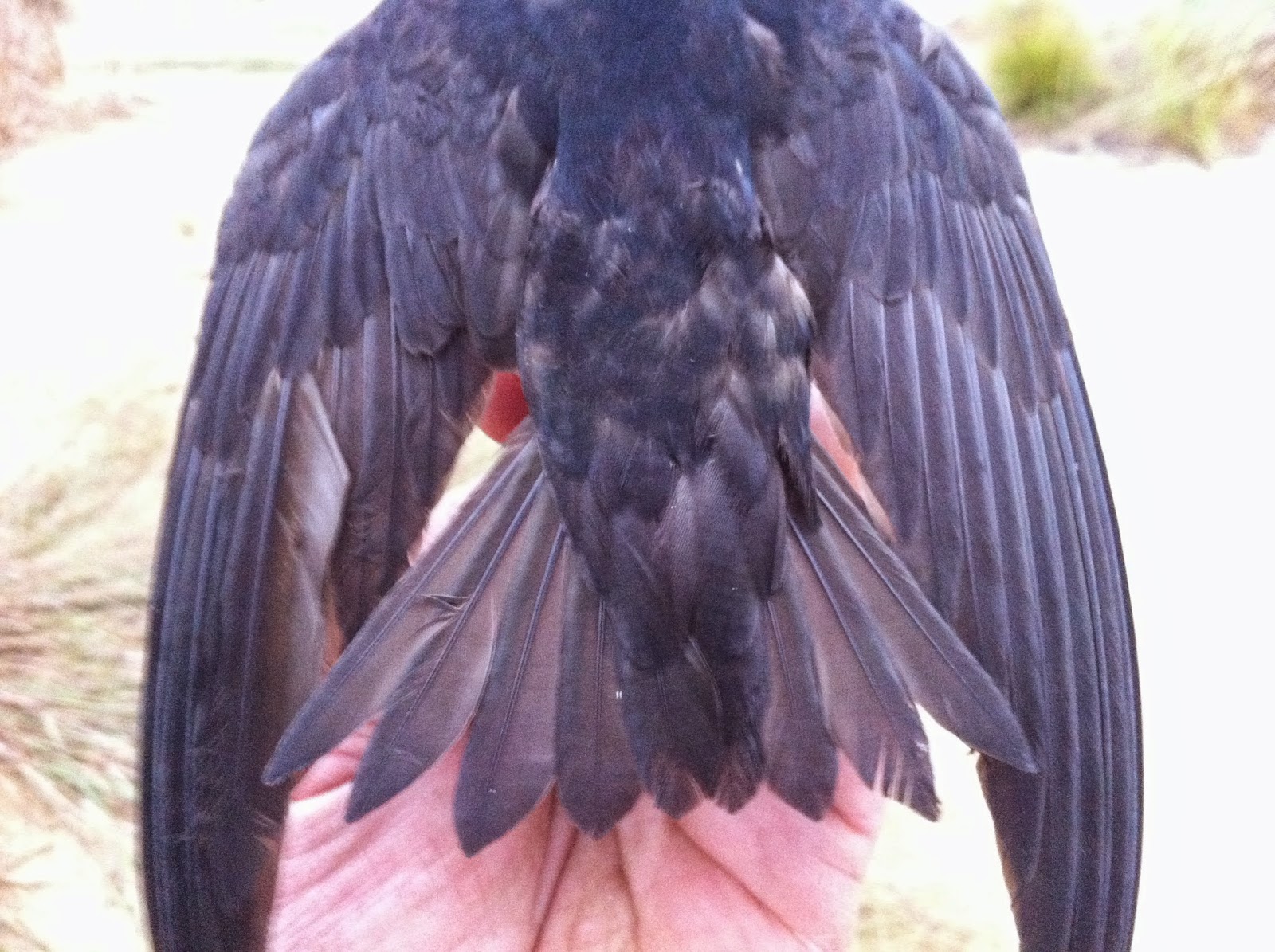
We tried for a few White fronted Bee-eaters at a colony in a road quarry and succeded in getting one bird, but were very surprised to get a single black morph Horus Swift of the race 'Toulsonii' or sometimes known as Luanda Swift. The jury is still out on this one!

Black morph Horus Swift 'toulsonii' 2


 All in all a great trip with some good birds seen including Red-necked Buzzard, Damara Tern (new) and quite a few remaining Rosy Bee-eaters about now during their non breeding season.