Wednesday, February 19, 2020

The Dry North-West and the Kalahari

After a month in the UK, much as I love an autumn nest full of Blackcaps Chiffs and Whitethroats, I was ready for some African bush birds again. So with Graeme, Graham and Roly, we set off on a different trip to what I normally do, to the west and the Kalahari in the Northern Cape.
We made our way via a couple of really nice bush lodges, and caught a good variety of species, a Klaas's Cuckoo was notable for winter as an afro-tropical migrant, either a very early bird, or one that stayed over?
We were extremely lucky to find a few flowering Jamesbrittenia bergae which were discovered in 2002 only here on this small range of hills!
Heading West, we stayed at a camp near the Botswana border, so dry, the dam at the camp, that we had nets round, was very low and well attended by a few White Rhino, which made net checks interesting!
Lark-like Buntings had arrived, and we caught a few of these nomadic and irruptive birds. 
It was so dry we were not seeing many raptors, other than a few Pale-chanting Goshawks of which we caught a few.nWe managed to catch 2 Rufous-cheeked Nightjars in camp, these are an afro-tropical migrant and had clearly arrived already!
At our next camp, we netted at a waterhole for Burchell's Sandgrouse and got several of these cool birds as well as a little Pearl-spotted Owlet one night. There were a few Fawn-coloured Larks singing which responded very well to playback and we caught an individual which was a first for me!
On the way to the Kalahari and our next camp, we were lucky to find a Martial Eagle sitting on a pole at 0800. We got a trap down and the bird was soon on the trap and was caught soon after! It was an adult female at 4.3kg's and a bird Graeme would not forget in a hurry!
After having caught Africa's largest Eagle, we then caught Africa's smallest raptor, a Pygmy Falcon! 
We lost quite a bit of netting time to the strong wind that was constantly blowing, so a day in the park was had where we saw lions and a Caracal catching sandgrouse at a waterhole!
On the way back, we stopped off at a big dam to see if we could catch some arriving waders from the palearctic, and whilst there were a few Curlew Sandpipers, Greenshank and Ringed Plover present, there were not enough to take big catches and just caught White-fronted, Kittlitz's and Blacksmith Plovers.


the crazy looking White-crowned Helmet-shrike!

Jamesbrittenia bergae

always sassy, Magpie Shrike

Klaas's Cuckoo, adult female

Acacia Pied Barbet

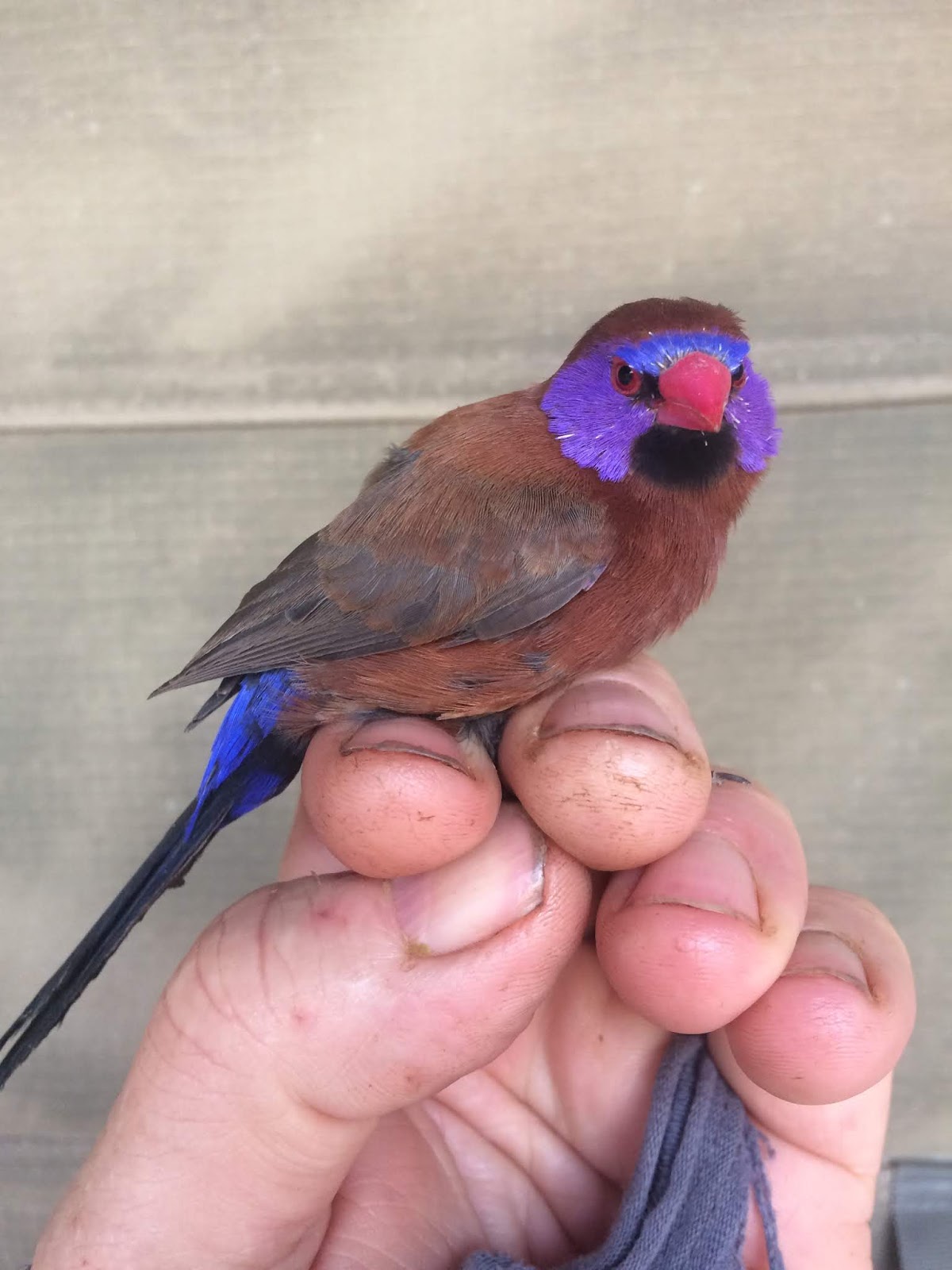
Violet-eared Waxbill

Lark-like Bunting

Rhino and the nets opposite!

a Puffy!

Fawn-coloured Lark

Burchell's Sandgrouse

Rufous-cheeked Nightjar

endemic Southern Pied Babbler

the business end!

the Martial!

Pygmy Falcon

Kittlitz's Plover

White-fronted Plover


Tuesday, February 18, 2020

Winter weekends July-August 2019

The first of the weekends, I took my girls up to Magoebaskloof, a mountainous area of natural afro-montane mist belt forest, but nowadays, more pine plantation. The aim was to catch Forest Buzzards, a poorly know endemic migrant.
But first we stopped off at Wonderboom, a site on the top of a big ridge overlooking Pretoria with Pieter and Natasha Saunders. The task was to climb a 70m tower to ring a baby Verreaux's Eagle!
a long way up
worth the climb!


just the one juv Forest Buzzard
little feet!


view of Pretoria from the top of the tower
Forest Buzzard 


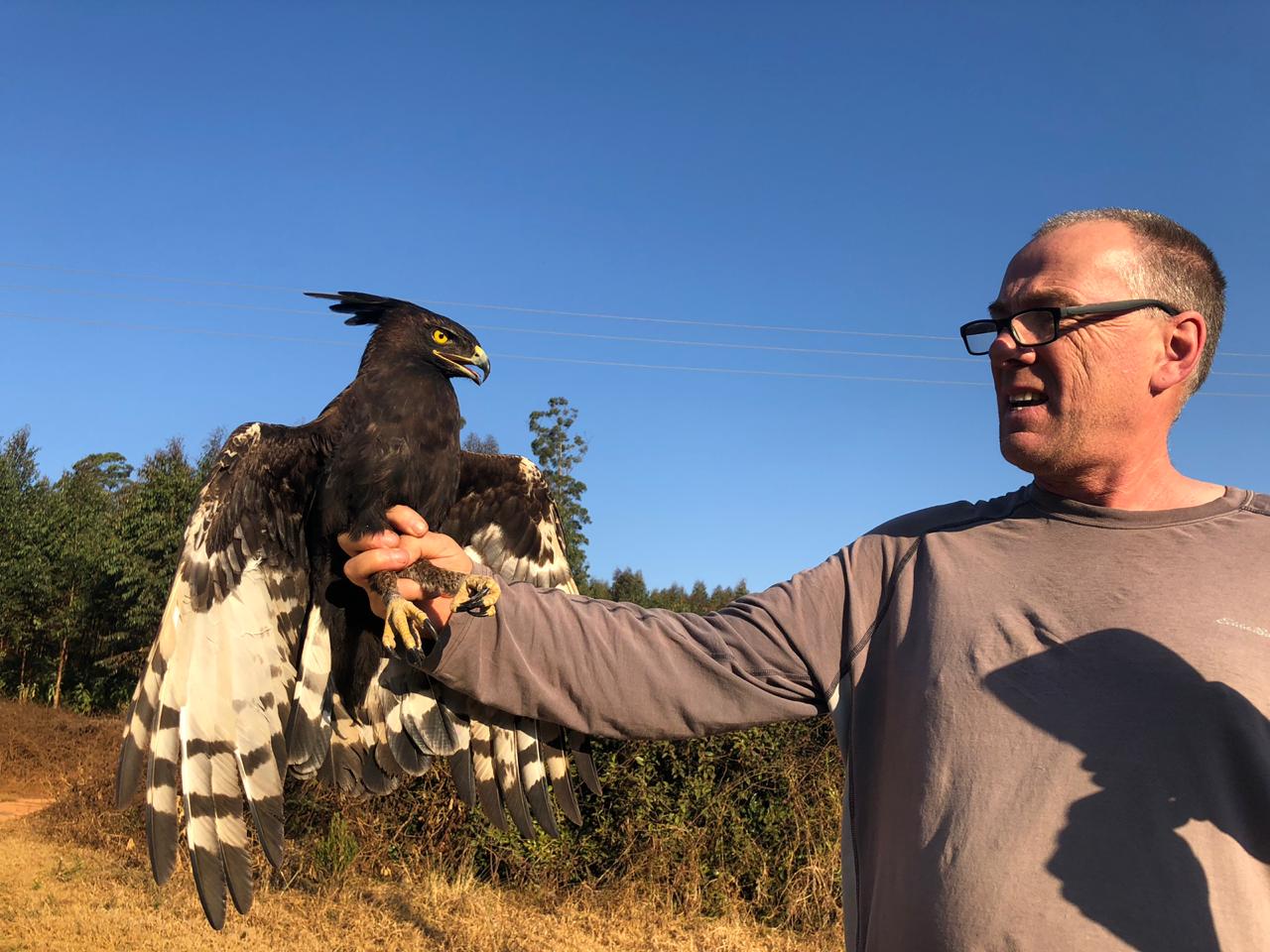
The next weekend I went back up with the lads, Bruce, Wille and Jaco. We didn't get any Forest Buzzards, (saw a few, and re-sighted the one we caught last week) but we did get a good few other raptors. We got 3 Long-crested Eagles, 4 Jackal Buzzards, and a Lizard Buzzard. One spectacular catch was getting an adult JB off the top a mast on top of a very big hill, it was a very long way off as you can see in the picture!!

Woodbush Forest


Add caption


Malawi, July dry winter ringing

After Rwanda, I was asked by Operation Wallacea to go and do some ringing fieldwork at a site just outside Llilongwe.
Being winter, there were no migrants around, but a good selection of local species, considering the pressure on the habitat from local villagers. We found a Dickinson's Kestrel which was a good record for the area, but sadly no mice to catch it with!
Everywhere in the surrounding bush, there was burning and wood cutting, we had a small section of riverine woodland to ring in and so with my assistant, Bryn Webber, who normally has ringed on Hawaii! we conducted a series of demonstrations and talks on what we can gain from bird ringing.
We ended up ringing 148 birds of 48 species! Schalow's Turacos were common, but too high for our nets!


a trio of Little Bee-eaters

female Chin-spot Batis

Male Scarlet-chested Sunbird

Red-winged Warbler

the ringing camp

Grey-headed Bush-shrike

Bryn with an Emerald-spotted Wood Dove

Bryn learning the hard way about Black-collared Barbets!

Black-collared Barbet


male Red-throated Twinspot
a new one for me Southern Citril!
female Black-throated Wattle-eye


Students at the ringing table


Tuesday, January 21, 2020

February March Limpopo 2020 trips


adult Lesser Kestrel

Water Dikkop
Long-crested Eagle


Magpie Shrike


a good haul of Amurs
African Hawk Eagle

After the snow of Ontario, I came back to do 2 back to back trips during February and March.

There were 6 regulars on the first trip, Richard Charles, Richard Dobbins, Nick and Jill Tardivel, Kieth Smith and Eugene Hood. Then Mark and Theresa Stanley on the second.

Our first trip was very successful with 236 birds ringed of 80 species with 26 retraps and 54 birds of Prey of 16 species plus 3 retraps;

Steppe Buzzard  12
Jackal Buzzard  2
Black-chested Snake-eagle 6
Brown Snake-eagle 3
African Hawk Eagle 2 (1)
Long-crested Eagle 1
Lanner Falcon 3
Dark-chanting Goshawk 2
Pale-chanting Goshawk 2 (1)
Gabar Goshawk 1
Greater Kestrel 2 (1)
Lesser Kestrel 1
Amur Falcon 14
Pearl-spotted Owlet 1
African Scops Owl 1
White-faced Owl 1


Remarkable retraps consisted of a 12 year old Pale-chanting Goshawk, an adult when ringed and a Greater Kestrel of 6 years, also an adult when ringed, both from the same area they were initially caught. The AH Eagle retrap was of an immature, ringed as a juv 2 years prior and 5 ks away!


The northern sites of acacia (virgelia and senegalia) bush provides with a mix of local species, Levaillant's Cuckoo, Violet-backed Starling, Grey-headed Bush-shrike, Woodland, Brown-hooded and Malachite Kingfishers, and Palearctic migrants included Europen Roller, Marsh and Willow Warblers, Red-backed Shrike. At night, Richard Dobbins managed to dazzle a Water Dikkop.


The highland mist belt forest site produced some endemics, Barratt's Warbler, Forest Canary, Cape Grassbird, Drakensberg Prinia, Southern Double-collared Sunbird and Olive Thrush, as well as Dark-capped Yellow Warblers, Olive Bush-shrike and a gorgeous pair of Malachite Sunbirds.
At the last site, we had a very successful session at the Amur Falcon roost catching 14 birds.

adult male Malachite Sunbird


Friday, May 31, 2019

Broad-winged Hawks, now we know what to do!

On my way over to Canada, I stopped of briefly in the UK to ring a brood of Tawny Owls with Paul Roper, oh and a quick hello to Mum and family!

But I was very keen to get to Canada and to spend the next 4 weeks in the woods of upstate Ontario looking for Broad-winged Hawks to ring (Band) with my Charlotte.

Thanks to Simcoe County Banding Group and coordinator Nigel Shaw, we had got some colour bands for the birds and armed with these we set off up into 'cottage' country and the land of a thousand lakes.

last year we did exceptionally well with 46 birds banded, and hoped to repeat that success, but what we ended up with was right off the chart of anything we could have imagined, with a huge tally of 97 birds banded plus a retrap!!!

Our first session got off to a flying start and in particular re-trapping a bird from last year in exactly the same place! This bird (now X05!) had been all the way down to South America and back to the same tree almost!

Out of all the birds we caught we only got one juvenile (2nd year) with the remainder all adults, with most 1st year birds staying on the over wintering grounds.

New ones for me were seeing a Black Bear for the fist time, a gorgeous beast we disturbed sunbathing in a meadow! The only 'tick' was a Purple Finch, a smart bird. Also finally going to see Niagra Falls when we went to go pick up my niece Flora who was taking a work break from NY to come see us!


smart birds are Broadwings..
X05, back at the same spot

Bear tick!

view from our friends Jan and Ralphs dock

Purple Finch 
adult male American Kestrels were around, we got several 


adult male American Redstart
Charlotte and her favourite, Barred Owl!


quite often we would get whats called a 'double header' two birds on one trap!